In the previous post, I reflected on how moving between Malaysia and the UK sharpened my awareness that access is not only structural but relational and cultural. The ways care is offered, recognised and responded to can vary widely depending on context.
Trying to understand these differences led me to several ideas within disability scholarship and anthropology. Each highlights a different aspect of accessibility – how people create possibilities within environments that were not designed with them in mind and how access can be felt when attentiveness replaces the need for explanation.
Relational access emerges in conversation with these ideas.
People as affordances
Disability anthropologist Arseli Dokumacı explores how accessibility often emerges through what she calls ‘microactivist affordances’ – small, everyday acts through which disabled people reshape environments that were never designed with them in mind.
A partner slices bread because gripping a knife causes pain. Furniture is rearranged so that moving through a room requires less effort. A kitchen is reorganised so that frequently used objects sit within easier reach.
These adjustments are rarely dramatic. They appear through ordinary gestures that gradually reshape a space.
Dokumacı extends this idea through the concept of “people as affordances.” Sometimes the affordance that makes action possible is not an object or piece of infrastructure but another person. Someone lifts a heavy bag. Someone steadies a chair. Someone adjusts the pace of a conversation. In these moments, accessibility emerges through relationships.
At the same time, people can also block affordances. A wheelchair space may exist on a bus yet other passengers occupy it and refuse to move. In such situations access collapses not because infrastructure is absent but because social behaviour prevents affordances from emerging. These examples reveal that accessibility is not only material but social.
Dokumacı’s work also highlights an important tension. Many of these everyday adjustments exist because environments remain inaccessible in the first place. The ingenuity and resilience of disabled people should not be romanticised as a substitute for structural change.
This insight echoes a central principle of the ‘social model of disability’, which argues that disability emerges not simply from individual bodies but from barriers embedded in social and physical environments. Accessibility therefore remains a structural responsibility.
Relational practices may support access but they cannot replace the institutional work required to remove barriers. When accessibility depends solely on the attentiveness of others, it becomes uneven and fragile, shaped by who happens to be present in a room. Structural accessibility – through infrastructure, policy and resources – creates the baseline conditions that allow people to participate without relying on the goodwill or awareness of others.
Access intimacy
Within disability justice discourse, Mia Mingus introduced the concept of ‘access intimacy’.
Access intimacy describes the feeling that arises when someone understands your access needs without requiring explanation. It is the sense of ease that appears when you do not have to justify your body or negotiate your presence.
Access intimacy often appears in subtle moments when someone anticipates the need for rest, when someone instinctively adjusts the pace of a conversation or when someone notices discomfort before it is voiced. These gestures signal that another person is paying attention.
For many disabled people such moments are rare yet powerful because they transform access from negotiation into shared understanding.
*
Taken together, these ideas illuminate different dimensions of accessibility.
Dokumacı’s work shows how people can become affordances for one another, creating possibilities for action within environments that remain inaccessible. Mingus reminds us that accessibility is also felt relationally. Access intimacy describes the ease that emerges when attentiveness replaces explanation.
Yet these frameworks leave an important question open “how are these conditions of access sustained once people are already sharing a space?”
In collaborative environments, accessibility rarely depends on a single gesture or adjustment. Needs change, energy shifts and relationships evolve. What allows participation to continue is often the presence of ongoing attentiveness – people noticing one another, responding to subtle cues and adjusting processes together.
Relational access names these practices.
If people can become affordances for one another and access intimacy captures the feeling of being understood, relational access describes how those possibilities and feelings are sustained through relationships over time. Access is therefore not only something implemented but something we maintain through social interaction.
Hospitality and mutual hosting
One way to understand this dynamic is through the language of hospitality.
Philosophical discussions of hospitality, particularly in the work of Jacques Derrida, often focus on the relationship between host and guest. A host prepares the space and a guest arrives to receive that welcome.
Derrida describes a tension between conditional and unconditional hospitality.
Conditional hospitality operates through rules and structures. Guests are welcomed but under certain conditions – invitations are issued, expectations are defined and boundaries are maintained. This form of hospitality makes social life possible because it creates order and predictability.
Yet Derrida also argues that pure unconditional hospitality is ultimately impossible. The moment a host opens their door, they already exercise authority over the space and therefore establish conditions for entry. Hospitality therefore always unfolds within a tension between rules and openness; between the structures that organise a space and the responsiveness required once others enter it.
Institutional accessibility often operates within this tension. Organisations host artists, participants or audiences whose needs are accommodated through policies, access riders or adjustments. These frameworks are essential because they establish baseline conditions for participation.
Yet in practice the relationship between host and guest is rarely so straightforward. In many artistic contexts institutions position themselves as hosts. They control the space, set the rules of engagement and define the terms of collaboration. Artists arrive as invited guests whose presence is accommodated within those conditions.
At the same time, institutions also depend on artists. Without artists there would be no exhibitions, residencies or programmes to host. The institution may control the space but the work itself emerges through collaboration with those it invites.
This creates an inherent tension: the institution acts as host while also relying on its guests to produce the very activity it claims to host.
Once people enter a shared environment, new dynamics inevitably emerge. Needs shift, energy changes and forms alone cannot anticipate every situation. In collaborative environments hosting therefore does not remain fixed.
Participants move between roles of host and guest as they respond to one another’s needs. Someone slows a discussion so others can follow. Someone rearranges seating so everyone can see. Someone notices when another person needs a pause.
Hosting begins to circulate.
Agency and the willingness to stay
The experience of being hosted also shapes whether people feel able (or willing) to remain in a space. Artists may arrive as invited guests but the quality of that hosting matters. When conditions feel rigid, inattentive or extractive, participants may simply choose not to stay. Access, in this sense, is not only about entering a space but about whether people feel able to remain within it.
Hosting therefore cannot rest solely with institutions. Artists and collaborators also exercise agency in how they participate. Sometimes this means adapting to the environment they enter. In other situations it involves gently reshaping the dynamics of the space, suggesting alternative ways of working, adjusting the rhythm of conversation or creating small conditions of care for others in the room.
In these moments participants begin to host as well. This does not erase the responsibilities of institutions, which still hold structural power and control over resources. But it shifts the relationship from a fixed hierarchy of host and guest toward a more negotiated practice of collaboration. Hosting becomes something that moves between people.
Both institutions and artists begin to articulate what is possible, what is needed and where limits lie. Access emerges through this ongoing negotiation rather than being delivered in advance.
Relational access lives within this movement between the conditional hospitality of institutional structures and the attentiveness that emerges between people once they begin sharing a space.
Accessibility as culture
Relational access already exists in everyday gestures of attentiveness in the ways people adjust to one another, make room in conversations or quietly notice when someone needs support. Yet these practices often remain uneven and fragile unless they are intentionally cultivated.
When attentiveness depends solely on personality, accessibility becomes inconsistent, shaped by who happens to be present in a room. What makes relational access effective is not simply kindness but shared expectations.
In many creative environments this shift is already visible. Practices such as sharing access riders, asking about access needs in advance or accepting that cameras may remain off in online meetings have gradually become normalised. What once required explicit advocacy begins to function as part of the ordinary etiquette of collaboration.
Over time, gestures such as adjusting seating, slowing the pace of discussion or recognising when someone needs a pause stop feeling like special accommodations. They become part of the culture of the space.
Naming relational access helps bring these dynamics into view so they can be strengthened rather than left to chance.
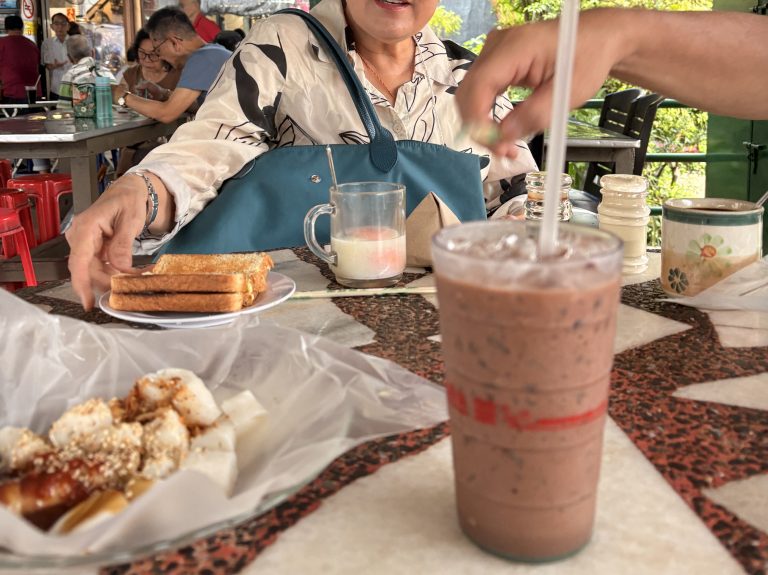
One place where these dynamics become particularly visible is the shared meal. Across many cultures, eating together functions not only as a social activity but as a small infrastructure of care. Food moves across the table, glasses are refilled and someone notices who has not yet eaten.
Hosting circulates naturally.
The shared table offers a glimpse of how relational access can unfold in practice through gestures, attentiveness and the quiet ways people make space for one another.
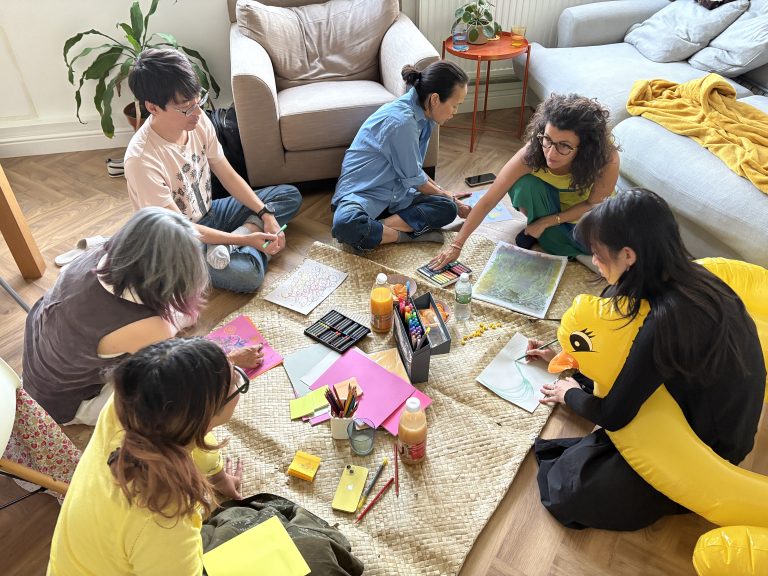
The next post shall turn to one such moment still being planned – a workshop centred around a shared mat where these dynamics of mutual hosting and relational attentiveness became visible in practice.
References
Dokumacı, A. (2017). Micro-activist affordances: How disabled people improvise more habitable worlds. Current Anthropology, 58(1).
Dokumacı, A. (2021). People as affordances: Building disability worlds through care intimacy. Current Anthropology, 62(3).
Mingus, M. (2011). Access intimacy: The missing link. Leaving Evidence Blog.
Derrida, J. (2000). Of Hospitality. Stanford University Press.
Oliver, M. (1990). The Politics of Disablement. Macmillan.
This research by Celina Loh draws on Southeast Asian communal practices such as eating together as a starting point to explore how relational approaches might complement structural access frameworks in the UK arts and cultural sector. Beginning with shared meals, the work expands into collaborative listening, sound and facilitation practices, reflecting on how care and attentiveness circulate within creative environments.
At its centre is a simple question, how do people create conditions where others want to remain? Through workshops, shared meals and listening practices, the research explores how participants notice one another, adjust and begin to host each other. While access often takes shape through structures, this work considers how it is sustained in practice through the ways people respond and make space for one another and themselves.
Loh’s research is supported by the British Art Network (BAN). BAN is a Subject Specialist Network supported by Tate and the Paul Mellon Centre for Studies in British Art, with additional public funding provided by the National Lottery through Arts Council England.