Access starts before the door
Access doesn’t fail because people don’t care. It fails because we treat it as something to be completed, rather than something shaped through systems, behaviours

Access doesn’t fail because people don’t care. It fails because we treat it as something to be completed, rather than something shaped through systems, behaviours
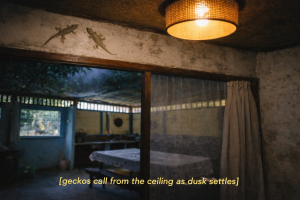
What began to surface through this work was a tension already present within captioning practice. Accessibility guidelines often prioritise clarity and legibility, which can discourage
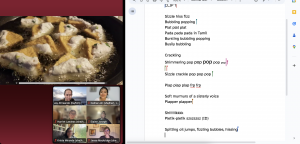
Building on the Shared Mat, I wanted to explore how relational access might unfold through sound. Collaborating with artist Jay Afrisando, we ran a workshop that invited participants to listen across cultures, notice differences and co-develop meaning together.
We began by listening to everyday sounds from Southeast Asia and noticing how they are interpreted differently across countries. Participants co-created captions collaboratively in a shared Google Doc, allowing everyone to see, edit and respond in real time. They experimented with onomatopoeia, font size, layout, timing and emphasis, noticing how even subtle changes could alter tone, emotion and interpretation. As captions emerged in Tamil, Filipino, Thai and other linguistic contexts, the group began to reflect on how sound is never neutral – it carries cultural humour, rhythm and social cues.
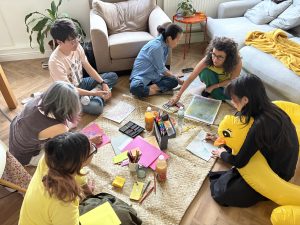
When people gather around a shared mat, the room changes. Shoes collect quietly by the door. Plates appear in the centre of the floor. Someone

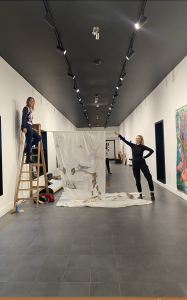
Mind the Gap exhibition explores the experience of overwhelm from neurodivergent perspectives, highlighting the often invisible emotional and practical labour of the everyday.
In the previous post, I reflected on how moving between Malaysia and the UK sharpened my awareness that access is not only structural but relational