I move often between Malaysia and the UK. The first thing people ask in both places is usually about the weather – too cold, too humid, too grey, too wet. Small talk, yes but it tells me something about how people listen to their surroundings.
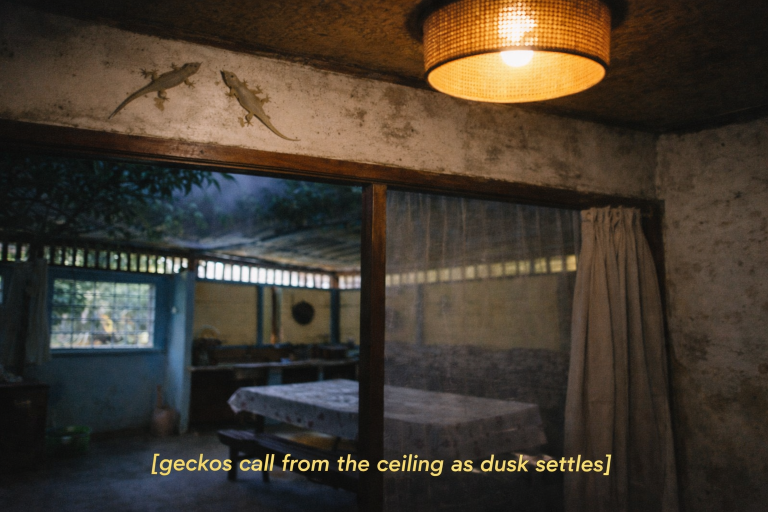
In Malaysia, humidity wraps around you like another layer of skin; the call to prayer cuts through traffic, rain on rooftops in hawker centres is louder than conversation. In the UK, rain is quieter; it’s something you listen through rather than against. These contrasts in noise, silence, warmth and distance shape how I think about access, relation and how we come to know care. Environments train us in attentiveness long before any policy does.
I’ve always been aware that I listen differently, not only because I’m deaf on one side but because I’ve been shaped by multiple ways of sensing and being hosted. Both the UK and Malaysia are home but each teaches me different ways of noticing, showing up and relating. I often rely on tone, pacing, atmosphere and peripheral cues rather than instruction alone. Moving between these contexts, I notice how what counts as ‘access’ shifts, not only in form but in feeling. These observations shape both my personal perspective and my research into relational access.
My research into relational access emerges from my Malaysian roots and from years of supporting artists of diverse backgrounds across the UK, Malaysia and Indonesia through residencies, commissions and collaborative projects. I have consistently aimed to provide thoughtful support yet I began to notice that care and access manifest (and are recognised) very differently across cultural contexts.
Some Southeast Asian or diasporic artists struggled to request support in ways that aligned with their lived experience. Standard approaches I have learned and been practising in the UK – the procedural guidance, forms or verbal instructions – did not always resonate. Asking directly could feel uncomfortable, culturally inappropriate or overly exposing; not asking, meanwhile, was often misread as not needing support.
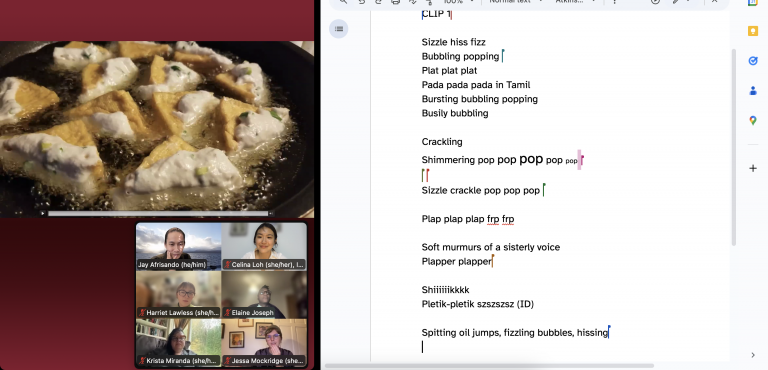
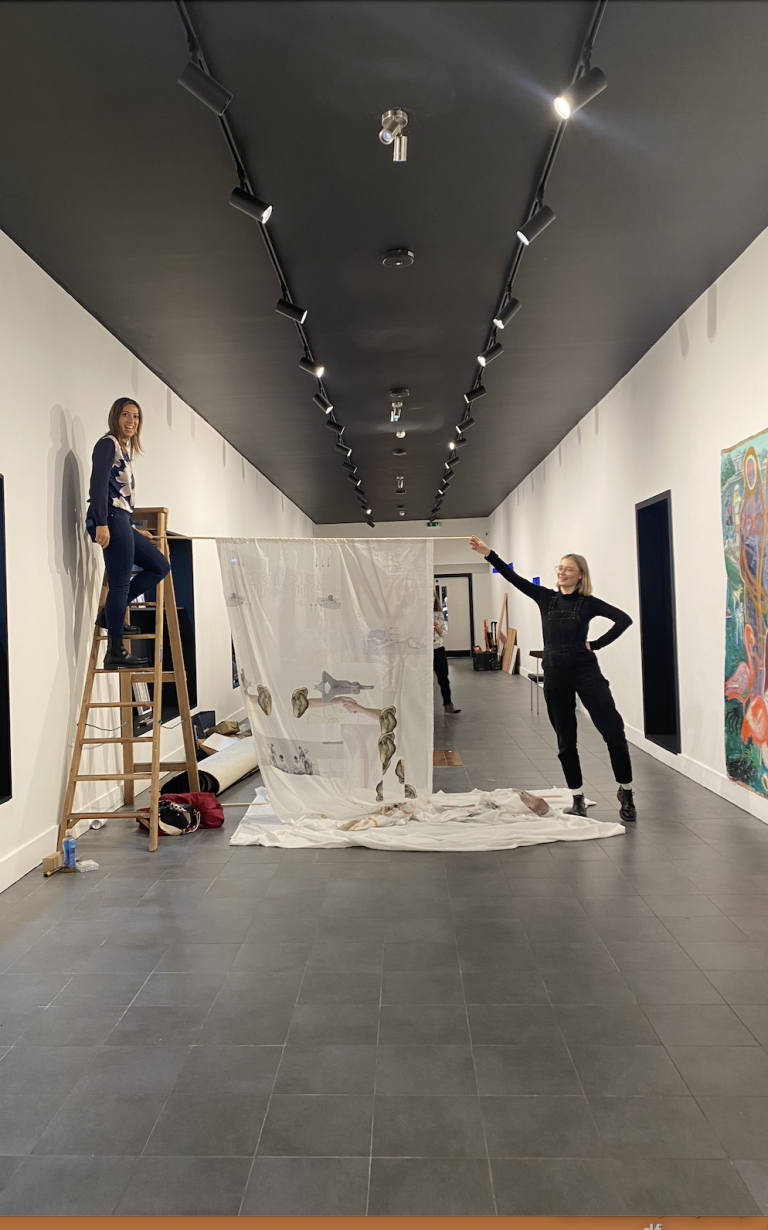
This insight crystallised during a residency run through In Transit in partnership with Filamen, supported by the British Council CTC grant. The project brought together two UK artists and two Malaysian artists in an access-focused, new media residency. As artists from different cultural backgrounds navigated support, I faced a recurring frustration: conventional access methods were not always effective and it was not always clear how support could be requested, interpreted or received. At times, care was offered but not taken up; at others, needs were present but remained unspoken. These moments revealed the limits of standardised access practices and shaped my focus on relational access – an approach attentive to cultural frameworks, trust and collaborative care. Something more human.
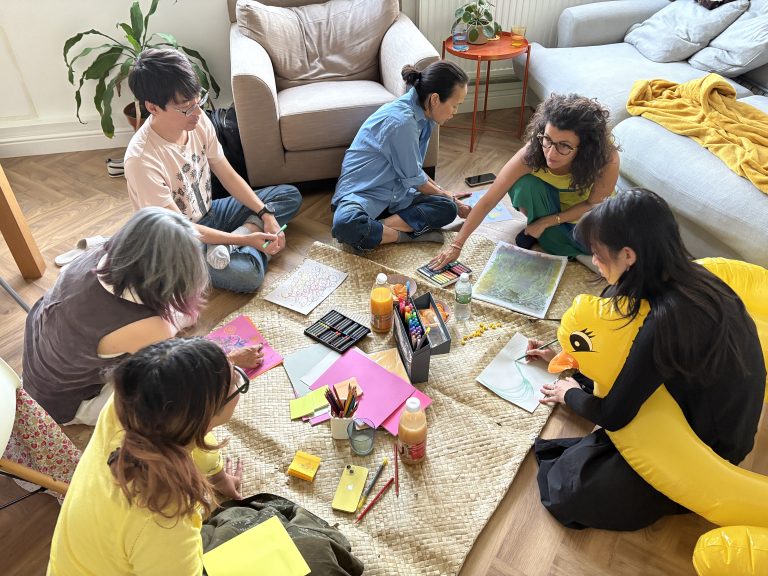
The British Art Network is further supporting this inquiry, providing space to develop workshops that will test hybrid approaches to access, multisensory engagement and relational care. This support enables an ongoing exploration of access not as something to be delivered correctly but as something that must be continually negotiated. Together, these experiences shape a trajectory focused on how access is perceived, requested and enacted across cultural contexts.
Access in the UK and Southeast Asia
In the UK, access often arrives through structure – access riders, adjustment forms, institutional policies – all designed to make care visible, accountable, measurable. These frameworks emerge from the social model’s insistence that barriers, not bodies, disable. Disclosure can be powerful, functioning as a tool of self advocacy and recognition.
Yet too often, the process ends there. Access is agreed but not revisited. Adjustments are implemented once, without much follow up. Care exists on paper yet its delivery can feel distant. Over time, access becomes transactional rather than relational; the structure works but the room can remain cold.
Relational access is not only about who gets a seat at the table but who stays once there. Support can be technically correct and still insufficient if it is not attentive, ongoing and shared. People often leave not because access was absent but because it was static – unable to respond as needs, energy or trust shift.
In Southeast Asia, access is rarely formalised. In comparison to the UK, it is often described as ‘behind’ in conversations about accessibility – lacking infrastructure, policy or resources. While these material gaps are real and significant, this narrative can obscure what the region also holds – a cultural sensibility that understands access as a collective improvisation. Care circulates through proximity, familiarity and social attention. You do not always have to declare your need because someone is already watching, adjusting, making space.
This relational approach is shaped by collectivism but also by constraint. Informal care relies on closeness and familiarity, which can be deeply supportive (and at times suffocating or difficult to refuse). Still, daily life encourages attunement. Humidity softens pace. Traffic slows everyone down. The azan (call to prayer) drifts through layers of sound, marking time communally. These conditions cultivate responsiveness; to weather, to neighbours, to noise. Access here is often social before it is structural, shaped early through familial and communal expectations to notice and care for others.
Kindness looks different depending on context. In the UK, it often sounds like “take your time” or “let me know what you need.” In Southeast Asia, it’s someone already placing food on your plate before you ask. Both are care, just oriented differently; one through boundaries and consent, the other through nearness and anticipation.
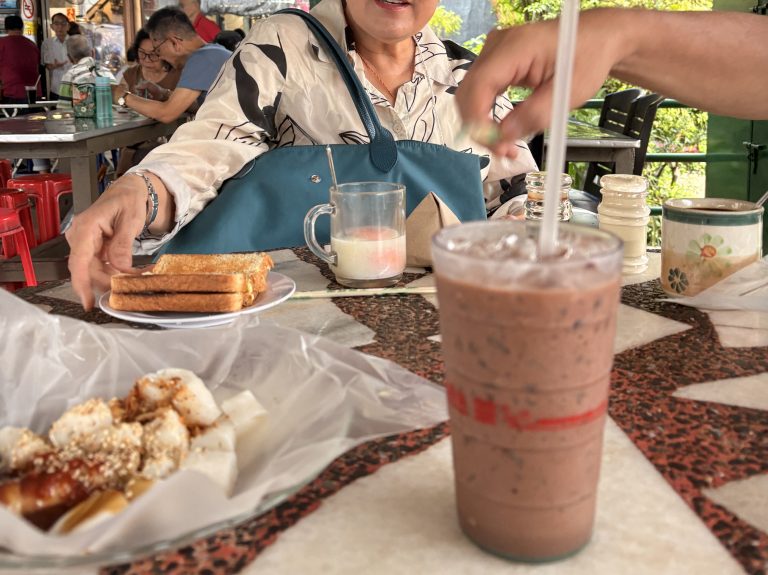
At home in Penang, the shared table is never just about food; it is an infrastructure of relation. Plates overlap, hands reach across, food is offered before it is requested. Leftovers are packed to take home with care extending beyond the moment of gathering. In the UK, shared meals are organised differently with individual plates, individual portions, clearer boundaries. There is safety and respect in this order but fewer opportunities for care to travel informally between people.
Feeling relational access
Relational access asks what might happen if we could hold both – the clarity of structure and the warmth of shared attention – without forcing one to erase the other. It emerges through gestures, trust and attention, not only through forms or procedures. It lives in the pauses, in the noticing, in what is offered before it is requested.
Between the drizzle of London and the monsoon rain on rooftops, between the quiet ‘let me know’ and the hand that reaches first, there are worlds of difference in how we offer and receive care. To listen otherwise is to learn that access is relational and cultural, sometimes intuitive, sometimes requiring negotiation – a process of sensing, adapting and being present together.
These moments of care are already happening in small gestures and everyday interactions. The challenge (and the opportunity) is to notice them, reflect on them and translate them into a framework that can guide collaborative contexts. In upcoming workshops and residencies, I continue to explore how gestures, sound, meal and space reveal what it feels like to be included, supported and held. These projects/happenings are not about perfect solutions but about observing, reflecting, forgiving and (un)learning together.
Access is living. Access is relational. And it is something we feel, as much as we do.
This research by Celina Loh draws on Southeast Asian communal practices such as eating together as a starting point to explore how relational approaches might complement structural access frameworks in the UK arts and cultural sector. Beginning with shared meals, the work expands into collaborative listening, sound and facilitation practices, reflecting on how care and attentiveness circulate within creative environments.
At its centre is a simple question, how do people create conditions where others want to remain? Through workshops, shared meals and listening practices, the research explores how participants notice one another, adjust and begin to host each other. While access often takes shape through structures, this work considers how it is sustained in practice through the ways people respond and make space for one another and themselves.
Loh’s research is supported by the British Art Network (BAN). BAN is a Subject Specialist Network supported by Tate and the Paul Mellon Centre for Studies in British Art, with additional public funding provided by the National Lottery through Arts Council England.